Águas Azuis is a Special Purpose Entity (SPE) established between TKMS, Embraer and Atech for the execution of the Tamandaré Class Frigates Program (PFCT) for the Brazilian Navy. These three companies have a solid and long-standing relationship with Brazil and a strong presence in several other countries.
Conducted since 2017 by the Brazilian Navy, the PFCT is the most modern and innovative naval project developed in the country, responsible for the construction of four technologically complex defense ships on national soil. The frigates are expected to achieve operational capability to protect the Brazilian Jurisdictional Waters (AJB), generate technology transfer, and promote local industry and shipbuilding in the country.
The construction is being carried out entirely in Brazil, at the TKMS Estaleiro Brasil Sul, located in Itajaí (SC). It will ensure a robust transfer of naval engineering technology to the country. The construction methodology adopted by thyssenkrupp Estaleiro Brasil Sul involves the production of the Tamandaré Class Frigates in blocks that are later assembled.
Mission
Tamandaré Class Frigates
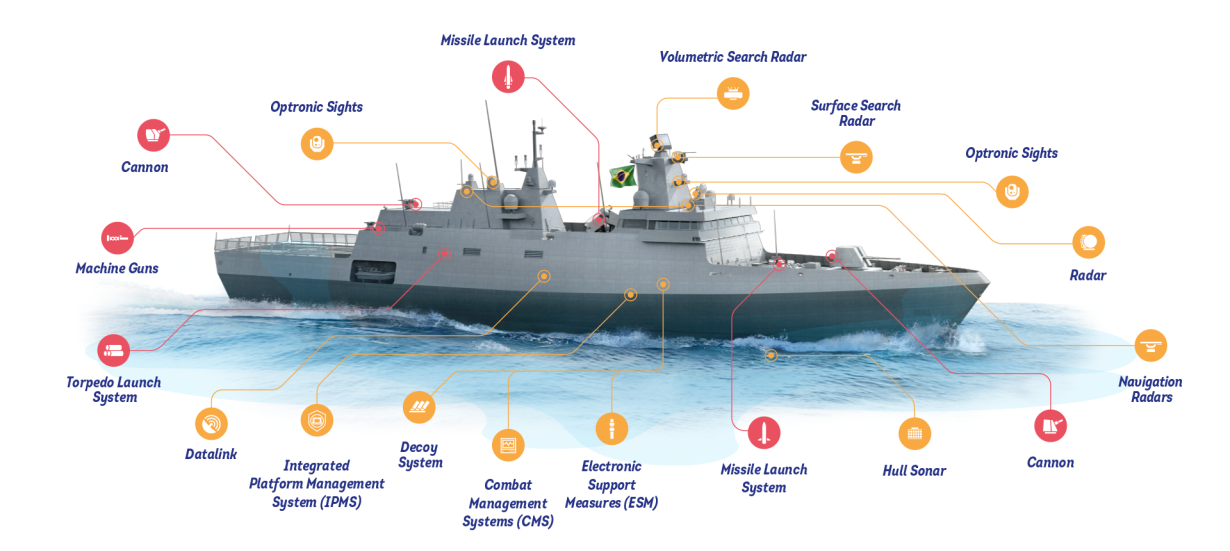
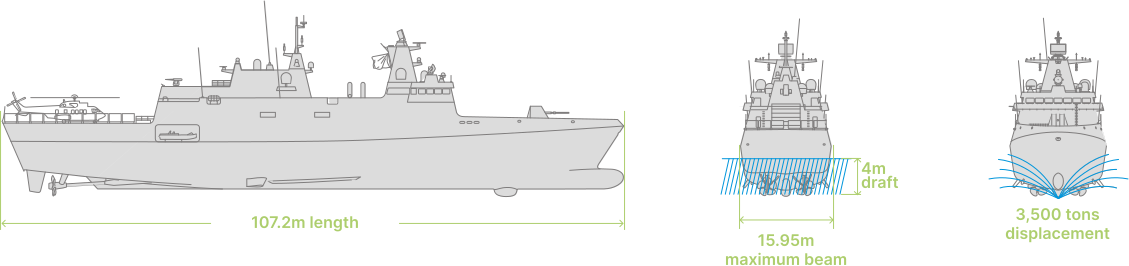
The Tamandaré Cclass Frigates are 107.2 meters in length, with a maximum beam of 15.95 meters, a displacement of 3,500 tons, and are equipped with a flight deck, helicopter hangar, state-of-the-art radars, sensors, and weaponry, as well as exceptional stability and adaptability. It is an escort ship with significant combat capability and resilience at sea, operating in all warfare environments: surface, air, and submarine. The capacity is for about 130 crew members, plus a helicopter and a drone, an unmanned vehicle, capable of vertical takeoff and landing.
Technology and Development
The Águas Azuis companies have a solid and long-standing relationship with Brazil and a strong presence in several other countries.
Naval Construction 4.0
Under construction at TKMS Estaleiro Brasil Sul, the Tamandaré Class Frigates Program marks an unprecedented South American naval industry approach with a fully digital process known as "Paperless." This methodology eliminates printing documents, such as drawings and technical manuals, replacing them with digital solutions accessible on dozens of kiosks and tablets distributed throughout the production area. Engineers from thyssenkrupp in Brazil and Germany update documents in real time, ensuring greater control, precision, and information security.
The digitization of processes not only increases data security — an essential requirement in highly confidential military projects — but also reduces environmental impact by saving resources that would be used for printing and distributing paper. Through connected devices, workers can access 2D and 3D technical drawings, checklists, manuals, and operational procedures updated in real time, optimizing stages such as labor tracking, material traceability, and quality verification.
Additionally, augmented reality is already being used to construct frigates. With special glasses, technicians can view holograms overlaid on physical parts, allowing them to validate assembly positioning, check for interferences between sectors, and perform quality checks. This technology also allows specialists in Germany to provide remote support, guiding teams in real time.
Sustainability

Return to Society
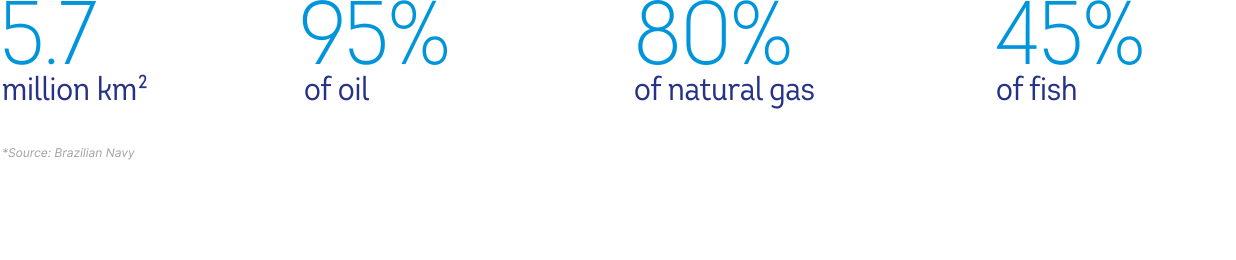
The public investment in the construction of the Tamandaré Class Frigates will generate jobs and income, in addition to providing the Brazilian Navy with a fundamental instrument for protecting the country's maritime region, known as the Blue Amazon. Over 95% of Brazil's foreign trade passes through this area, and about 95% of the national oil is extracted from it. The region also contains numerous mineral resources, environmental sites, ports, and industrial and energy centers.

Blue Amazon
Blue Amazon
This region encompasses the sea surface, the waters overlying the seabed, and the marine soil and subsoil within the Atlantic extension that projects from the coastline to the outer limit of the Brazilian Continental Shelf. The region was given this name due to its similarity to the Amazon rainforest and its vast size, wealth, and importance.